
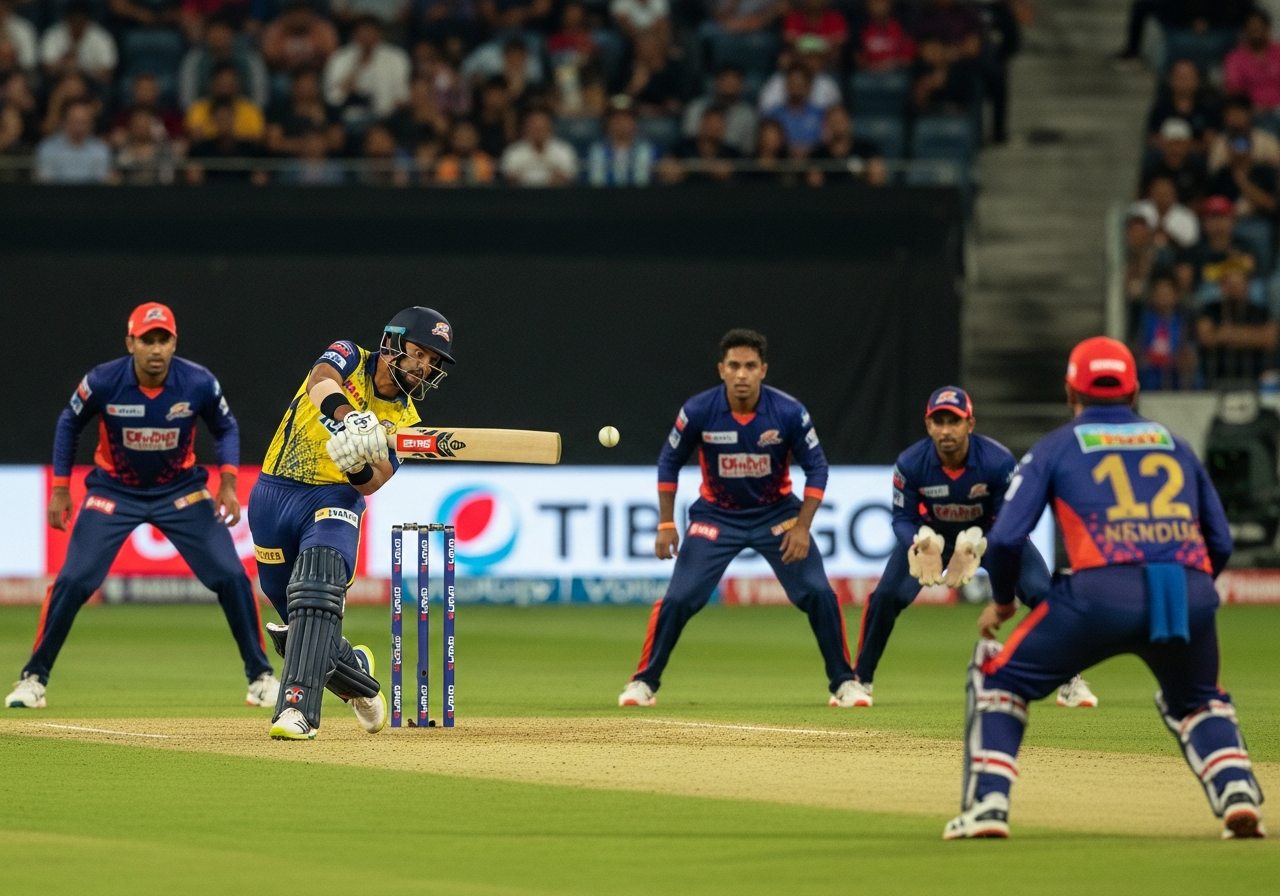
When India posted a staggering 297/6 against Bangladesh in Delhi, it showcased the explosive nature of T20 cricket and highlighted why betting on total runs has become one of the most thrilling markets for cricket enthusiasts. Total runs betting, particularly over/under aggregate wagering, offers punters the chance to capitalize on the inherent volatility that defines Indian T20 matches, where scores can swing dramatically based on conditions, team composition, and momentum shifts.
Indian T20 cricket presents unique opportunities for savvy bettors who understand the nuances of run accumulation patterns, venue characteristics, and the impact of dew on second innings scoring. This comprehensive guide explores proven strategies, statistical insights, and advanced techniques that can give you an edge in this dynamic betting market.
What is Total Runs Betting in T20 Cricket?
Total runs betting in T20 cricket involves wagering on the combined runs scored by both teams in a match, with bookmakers setting a line that bettors can either back to go over or under. Unlike traditional match winner markets, total runs betting focuses purely on run accumulation, making it independent of which team actually wins the contest. For example, when India scored 297/6 against Bangladesh, even if Bangladesh had scored 200 in reply, the total of 497 runs would have comfortably exceeded most bookmaker lines set around 350-370 runs.
The beauty of this market lies in its accessibility and the wealth of statistical data available to make informed decisions. Bookmakers typically adjust their lines based on factors such as venue history, team batting strength, pitch conditions, and weather forecasts. Understanding how these variables interact is crucial for identifying value bets in what can be a highly volatile market.
Indian T20 matches present particularly attractive opportunities due to the country’s batting-friendly conditions, shorter boundaries at many venues, and the presence of explosive batsmen who can single-handedly influence total scores. The format’s unpredictable nature means that even seemingly conservative totals can be surpassed when conditions favor aggressive batting.
Over/Under vs Runs Line Markets
- Over/Under Simplicity: Straightforward binary choice with clear win/lose outcomes, making it ideal for beginners who want exposure to T20 totals without complex calculations
- Runs Line Flexibility: Allows for handicap betting where teams get virtual runs added or subtracted, offering better odds on favorites while providing insurance on underdogs
- Liquidity Differences: Over/under markets typically offer higher liquidity and tighter spreads, while runs line markets may have wider margins but better value for informed bettors
- Risk Management: Over/under betting provides cleaner risk assessment, whereas runs line markets require deeper analysis of team strength differentials
- Live Betting Advantages: Over/under lines move more predictably during matches, making in-play opportunities easier to identify and execute
Typical Total Runs Lines for India T20s
| Match Type | Avg Total Line | Common Over/Under Odds | Example |
|---|---|---|---|
| India vs Top Teams | 340-360 | 1.90 / 1.90 | IND vs ENG (355.5) |
| IPL High-Scoring Venues | 375-390 | 1.85 / 1.95 | Wankhede Matches (380.5) |
| India vs Associate Nations | 310-330 | 1.95 / 1.85 | IND vs BAN (325.5) |
| IPL Bowling-Friendly Tracks | 290-310 | 1.88 / 1.92 | Chepauk Matches (305.5) |
| International T20 Series | 320-345 | 1.90 / 1.90 | IND vs AUS (335.5) |
Historical Total Runs Data for Indian T20 Matches
| Date | Teams | Total Runs | Venue | Over/Under Result (Line 350) |
|---|---|---|---|---|
| Mar 2024 | IND vs ENG | 499/14 | Hyderabad | OVER |
| Oct 2022 | IND vs BAN | 465/15 | Delhi | OVER |
| May 2023 | RCB vs SRH | 455/13 | Chinnaswamy | OVER |
| Apr 2024 | KKR vs SRH | 445/17 | Eden Gardens | OVER |
| Jun 2023 | IND vs WI | 400/15 | Lauderhill | OVER |
| Sep 2022 | IND vs AUS | 369/12 | Nagpur | OVER |
| Jan 2024 | IND vs AFG | 365/14 | Indore | OVER |
| Nov 2023 | IND vs SA | 298/18 | Johannesburg | UNDER |
The historical data reveals a clear pattern of high-scoring affairs when Indian teams are involved, particularly on home soil. This trend has significant implications for total runs betting strategies and line assessment.
Key Trends from India T20 Records
Analysis of India’s T20 records reveals several critical patterns that smart bettors can exploit. Matches played on traditionally flat pitches in Hyderabad, Indore, and Delhi consistently produce totals exceeding 400 runs, with the venues’ shorter boundaries and batting-friendly conditions creating ideal environments for aggressive stroke play. The psychological factor also plays a crucial role, as Indian batsmen tend to adopt a more attacking mindset on home pitches where they’re familiar with bounce and pace variations.
Dew impact emerges as perhaps the most significant factor influencing total runs in Indian conditions. Evening matches, particularly during October to February, see dramatic improvements in batting conditions during the second innings as dew settles on the outfield. This phenomenon not only makes the ball skid onto the bat more easily but also reduces grip for bowlers, leading to shorter lengths and more scoring opportunities. Historical data shows that matches with significant dew factors average 15-20 runs higher in the second innings compared to day games.
The venue-specific nature of run scoring cannot be understated, with certain stadiums consistently producing totals that defy bookmaker expectations. Wankhede Stadium in Mumbai, despite its larger boundaries, sees scores inflated due to true bounce and fast outfields, while grounds like Eden Gardens benefit from shorter square boundaries that favor confident stroke makers. Understanding these venue-specific tendencies provides a crucial edge in identifying value bets before bookmakers fully adjust their lines.
Factors Influencing T20 Total Runs in India
- Pitch Conditions: Hard, flat tracks with even bounce favor high scoring, while two-paced or turning surfaces can restrict run flow significantly
- Weather and Humidity: High humidity makes the ball swing more in powerplay overs, while dry conditions typically favor batsmen throughout the innings
- Dew Factor: Evening matches with heavy dew create vastly different batting conditions between innings, often adding 20-30 runs to second innings totals
- Team Batting Depth: Modern T20 teams with batting until position 8-9 can accelerate scoring in death overs even after early wickets
- Bowling Attack Composition: Teams with quality spinners often restrict totals in middle overs, while pace-heavy attacks can be vulnerable in powerplay and death overs
- Recent Form and Momentum: Teams on winning streaks tend to bat with greater freedom and confidence, leading to more aggressive shot selection
- Tournament Context: Knockout matches or series deciders often see more conservative approaches, while dead rubber games can produce run feasts
Pitch and Venue Analysis
| Venue | Avg 1st Innings | Total Runs Avg | High Score Record |
|---|---|---|---|
| Wankhede, Mumbai | 185 | 362 | 235/4 |
| Eden Gardens, Kolkata | 178 | 348 | 272/4 |
| Chinnaswamy, Bangalore | 192 | 375 | 263/5 |
| Arun Jaitley, Delhi | 186 | 358 | 297/6 |
| Rajkot International | 188 | 365 | 280/4 |
| MA Chidambaram, Chennai | 165 | 315 | 246/5 |
| Holkar Stadium, Indore | 195 | 382 | 287/5 |
Weather and Dew Impact
Weather conditions, particularly dew formation, represent one of the most underestimated factors in T20 total runs betting. High dew levels create a significant advantage for the chasing team, with the wet ball becoming difficult for bowlers to grip effectively, leading to wayward lines and lengths that batsmen can capitalize on. Historical analysis shows that matches with heavy dew factor see second innings scores average 15-20 runs higher than first innings totals, a trend that smart bettors can exploit when bookmakers fail to adequately account for these conditions.
Top Strategies for Betting T20 Total Runs
- Pre-match Line Analysis: Compare opening lines across multiple bookmakers to identify discrepancies and value opportunities before public money moves the market
- Weather Condition Assessment: Check detailed weather forecasts focusing on humidity, dew point, and wind conditions that can significantly impact scoring patterns
- Team News Impact Evaluation: Monitor team announcements for key player availability, as the absence of star batsmen or bowlers can dramatically affect total expectations
- Historical Venue Performance: Analyze ground-specific trends over the past two seasons, paying particular attention to day/night variations and seasonal differences
- Live Hedging Opportunities: Use powerplay scores as indicators to hedge or double down on pre-match positions, with scores above 55/0 in 6 overs typically signaling high-total potential
- Opposition Analysis: Factor in bowling attack quality and recent form, as tired or depleted bowling units often concede 20-30 additional runs in death overs
- Tournament Context Consideration: Account for match importance and team motivation, as dead rubber games often see experimental lineups and more aggressive batting approaches
Advanced Bankroll Management for Totals
Effective bankroll management for T20 total runs betting requires adapting traditional staking methods to account for the format’s inherent volatility. The Kelly Criterion, when modified for T20 betting, suggests never risking more than 5% of your bankroll on any single totals bet, given the unpredictable nature of individual performances that can swing totals by 50+ runs. This conservative approach helps weather the inevitable losing streaks that occur when freak bowling performances or early collapses disrupt even the most well-researched predictions.
Diversification across multiple matches and betting exchanges provides additional protection against variance while maximizing opportunities to find value. Spreading stakes across 3-4 different totals bets per betting session, rather than concentrating on one match, helps smooth out the peaks and troughs inherent in T20 betting. Additionally, utilizing different bet types – combining over/under bets with team total markets – allows for more nuanced position management while reducing overall portfolio risk.
Advanced bettors should also consider the timing of their stakes, with evidence suggesting that lines move predictably in the 2-3 hours before match start as sharp money enters the market. Placing initial positions 24 hours before play, then adjusting based on team news and weather updates, often yields better average prices than last-minute betting when casual money has already moved the lines away from true value.
Team and Player Impact on Total Runs
| Team/Player | High Total Tendency | Recent Avg Contribution | Example Match |
|---|---|---|---|
| Virat Kohli | Very High | 65 runs @ 140 SR | 102* vs AFG |
| Sanju Samson | High | 58 runs @ 155 SR | 111 vs BAN |
| India vs Sri Lanka | High | 385 total avg | 390/12 Jan 2023 |
| India vs West Indies | Very High | 395 total avg | 400/15 Florida |
| Rohit Sharma | Moderate | 45 runs @ 125 SR | 85 vs AUS |
| India vs Australia | Moderate | 345 total avg | 369/12 Nagpur |
| Hardik Pandya | High | 35 runs @ 165 SR | 71* vs PAK |
Individual player impact on total runs cannot be understated, with certain batsmen possessing the ability to single-handedly push totals beyond bookmaker expectations. The presence of players like Virat Kohli and Sanju Samson in the Indian lineup significantly increases the probability of high-scoring affairs, not just through their own contributions but by creating partnerships that allow other batsmen to play with greater freedom.
Opposition analysis reveals clear patterns in India’s scoring rates against different bowling attacks. Matches against Sri Lanka and West Indies consistently produce higher totals due to their pace-heavy bowling lineups that Indian batsmen handle comfortably in home conditions. Conversely, teams with quality spin options like Australia and South Africa tend to restrict India’s middle-order scoring, leading to more conservative total predictions. Understanding these matchup dynamics provides crucial edge in pre-match betting decisions.
The psychological aspect of player combinations also influences total runs significantly. When explosive players like Hardik Pandya and Rishabh Pant bat together in the death overs, their aggressive mindset often produces boundary-heavy partnerships that can add 40-50 runs in the final five overs alone. These partnership dynamics, while difficult to predict precisely, follow observable patterns that astute bettors can exploit when bookmakers fail to fully account for batting depth and death-over capabilities.
High-Scoring Indian Batsmen Stats
| Player | T20 Runs (India Matches) | Strike Rate | Impact on Totals |
|---|---|---|---|
| Virat Kohli | 4,008 | 137.96 | +25 runs avg |
| Rohit Sharma | 3,853 | 140.12 | +22 runs avg |
| Hardik Pandya | 1,745 | 145.68 | +18 runs avg |
| Sanju Samson | 876 | 155.23 | +15 runs avg |
| Rishabh Pant | 987 | 126.45 | +12 runs avg |
Bowling Attacks That Keep Totals Low
- New Zealand’s Pace Attack: Trent Boult and Tim Southee’s swing bowling in powerplay overs consistently restricts India to under 50 runs in first six overs
- Australia’s Spin-Pace Balance: Adam Zampa’s middle-over control combined with Pat Cummins’ death bowling expertise limits Indian acceleration phases
- South Africa’s Varied Attack: Kagiso Rabada and Anrich Nortje’s pace variations in death overs prevent India from reaching 200+ first innings totals
- England’s Spin Options: Adil Rashid and Moeen Ali’s experience against Indian batsmen often restricts scoring in crucial 7-15 over phase
- Pakistan’s Pace Battery: Shaheen Afridi’s left-arm swing and Haris Rauf’s raw pace create early wicket pressure that hampers total accumulation
Best Bookmakers for T20 Total Runs Betting
| Bookmaker | T20 Totals Odds Boost | Cashout Feature | India Market Depth |
|---|---|---|---|
| Bet365 | 10% enhancement | Full partial | Excellent |
| 1xBet | 15% boost select | Limited options | Very Good |
| Betway | 8% regular | Excellent | Good |
| William Hill | 12% premium | Good | Moderate |
| Pinnacle | No boost | None | Excellent |
| 22Bet | 20% weekend | Basic | Good |
| Dafabet | Asian focus | Limited | Very Good |
| Parimatch | 5% regular | Good | Moderate |
Selecting the right bookmaker for T20 total runs betting requires balancing odds quality, market depth, and feature availability. The comparison reveals significant differences in approach, with some operators focusing on odds enhancements while others prioritize comprehensive market coverage and live betting functionality.
Odds Comparison Example
For a hypothetical India vs Sri Lanka T20 match with a total runs line set at 345.5, odds variations across bookmakers can be substantial. Bet365 might offer 1.90 for both over and under, while 1xBet could provide 1.95 for the over due to their enhanced odds promotions, representing a 2.6% difference in potential returns. Pinnacle, known for sharp lines, often opens at 1.92/1.88, providing the best under value but requiring quick action before public money moves the market. These seemingly small differences compound significantly over multiple bets, making bookmaker selection a crucial component of profitable totals betting strategy.
Common Mistakes in T20 Totals Betting
- Ignoring Dew Conditions: Failing to account for heavy dew can lead to significant underestimation of second innings scoring potential, particularly in October-February matches
- Overreacting to Recent Form: Placing excessive weight on last-match performances without considering opponent quality and conditions context
- Venue Bias: Assuming all Indian grounds favor high scoring without analyzing specific pitch characteristics and recent match history
- Team News Negligence: Missing key player availability updates that can dramatically shift total expectations, particularly late bowling changes
- Fixed Staking: Using identical stake sizes regardless of confidence level or value assessment, missing opportunities to maximize returns on high-conviction bets
- Single Market Focus: Concentrating only on match totals without exploring team totals or alternative lines that may offer better value
- Emotional Betting: Allowing personal team preferences to cloud objective analysis of scoring conditions and probability assessments
How to Avoid Losing Streaks
Preventing extended losing streaks in T20 total runs betting requires disciplined adherence to proven analytical frameworks and strict bankroll management principles. The key lies in treating each bet as part of a larger statistical sample rather than individual win/lose events, maintaining consistent stake sizing that never exceeds 3-5% of total bankroll regardless of confidence level. This approach ensures that even a sequence of 6-8 consecutive losses won’t seriously damage long-term betting capital.
Diversification across different match types and betting markets provides additional protection against variance while maintaining exposure to value opportunities. Rather than concentrating on India international matches exclusively, spreading attention across IPL games, bilateral series, and tournament cricket helps smooth out results over longer periods. Additionally, incorporating team total markets alongside match totals creates multiple routes to profitability even when overall predictions prove incorrect.
Regular analysis of betting decisions, both winning and losing, helps identify patterns that may not be immediately apparent during active betting periods. Maintaining detailed records of reasoning behind each bet, including weather conditions, team news, and confidence levels, allows for continuous refinement of analytical processes. This systematic approach ensures that short-term losses become learning opportunities rather than causes for dramatic strategy changes that often compound problems rather than solving them.
Live Betting Opportunities on Total Runs
Live betting on T20 total runs presents unique opportunities that pre-match markets cannot match, as real-time match developments provide crucial information that bookmakers often struggle to incorporate quickly into their odds adjustments. The dynamic nature of T20 cricket means that powerplay performances, early wickets, and batting partnerships create constant shifts in total expectations that alert bettors can exploit before odds catch up to new realities.
The key to successful live totals betting lies in understanding how specific match phases influence final scores and recognizing when bookmaker adjustments lag behind actual probability changes. For instance, when India reaches 65/0 after six powerplay overs, historical data suggests final totals average 15-20 runs higher than pre-match expectations, yet bookmakers often adjust lines by only 8-12 runs initially. These temporary inefficiencies create excellent value opportunities for bettors who understand scoring rate correlations.
Powerplay and Death Overs Signals
- Powerplay Over-Performance: When first innings powerplay exceeds 55 runs without loss of wickets, bet over the adjusted total as acceleration phases typically follow
- Early Wicket Clustering: If three wickets fall within first 10 overs, consider under bets as rebuild phases often restrict scoring until death overs
- Death Over Momentum: Teams scoring 50+ runs in overs 16-20 suggest good batting conditions favor similar acceleration in second innings
- Bowling Changes Impact: Monitor how key bowlers perform in their opening spells, as poor figures often indicate favorable batting conditions continuing
- Partnership Stability: Partnerships exceeding 80 runs in middle overs typically signal flat pitch conditions that favor high totals in both innings
- Weather Deterioration Signals: If dew becomes visibly heavy during first innings, second innings conditions will be significantly easier for batting